
Educational Activities
Practical Life
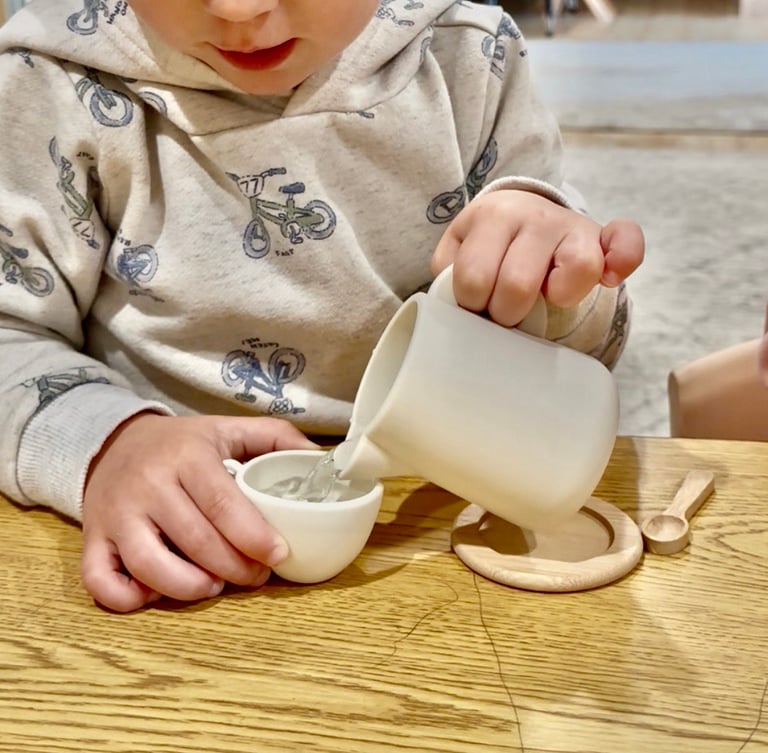
Practical life activities are a cornerstone of our Montessori-inspired approach, empowering children to develop independence, confidence, and a deep sense of responsibility. Each day, children engage in meaningful tasks such as dressing themselves, preparing snacks, setting tables, caring for their environment, and participating in art and self-care routines. These activities are intentionally designed to mirror real-life experiences, helping children build fine motor skills, concentration, and self-regulation while fostering values like gratitude, kindness, and respect for others. As children take ownership of their daily routines, they begin to understand the impact of their actions and develop intrinsic motivation. Whether pouring water, sweeping a spill, or folding napkins, each task becomes an opportunity to practice patience, precision, and pride in their work. These moments also nurture emotional resilience and problem-solving, laying the foundation for peaceful conflict resolution and attentive listening.


Sensorial
Sensorial activities aim to enhance children's sensory perceptions of sight, touch, sound, smell, and taste, enabling them to engage with and understand the physical environment. By participating in activities that involve colors, shapes, textures, weights, and dimensions—such as manipulating geometric shapes and color boxes—children delve into exploration. Within the Sensorial area, they match different sounds or scents, compare colors, categorize by size, and investigate flat and solid shapes, nurturing a sharp sense of observation and awareness of their surroundings.


Math
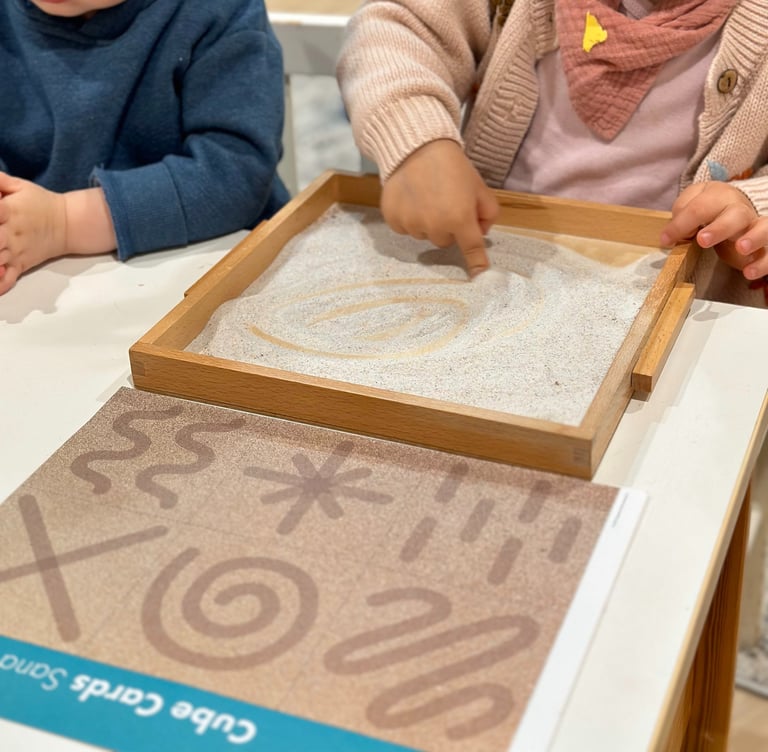
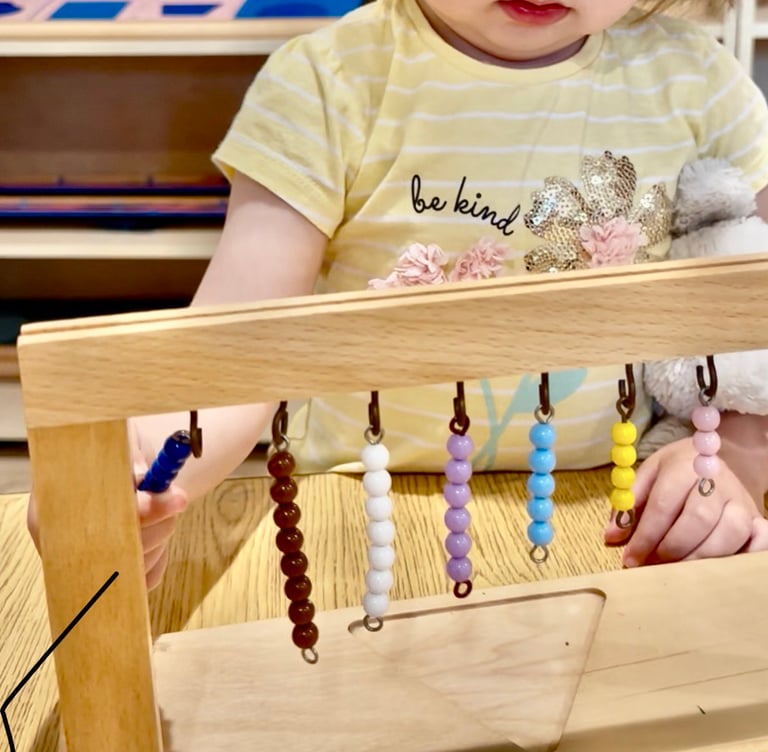
Children grasp numbers and mathematics by interacting with items. They begin with simple concepts like counting and learning the significance of zero. While engaging with tools such as sandpaper numbers, the spindle box, and golden beads, they discover how numbers relate to one another and learn addition, subtraction, multiplication, and division. It’s a journey from basic to more complex concepts. By handling and manipulating objects, they genuinely understand how math functions rather than just memorizing information.


Language
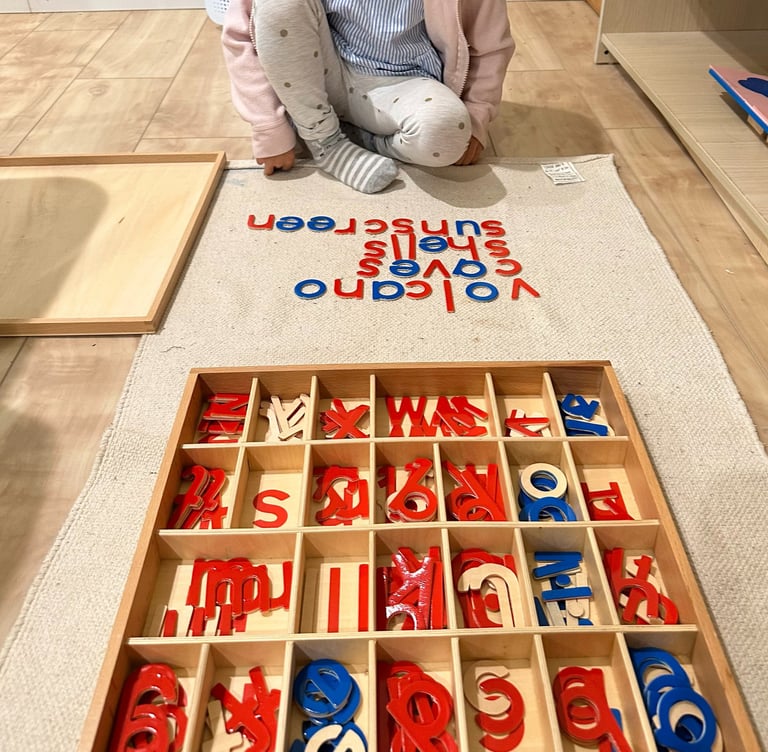
In our language program, children participate in enjoyable activities that involve talking, reading, and writing. They start by exploring the sounds of letters through games and sandpaper letters. Next, they use a movable alphabet to create words and sentences. They also develop their reading and writing abilities with various objects and visuals. Additionally, kids learn essential grammar. The activities include matching, sequencing, and vocabulary enhancement. As they progress, they learn to blend sounds, recognize difficult words, and construct sentences. This methodical approach helps children become effective communicators!


Have any questions?